Python + AI Automation: How to Build Smarter Workflows in 2025 (With Real Examples)
If you’re tired of repetitive work and scattered tools, this guide will help you build a clean, reliable automation stack. We’ll use Python for automation, clarify RPA vs AI, cover fine-tuning LLMs, and show where edge computing actually makes sense. By the end, you’ll have a simple blueprint you can ship this week.
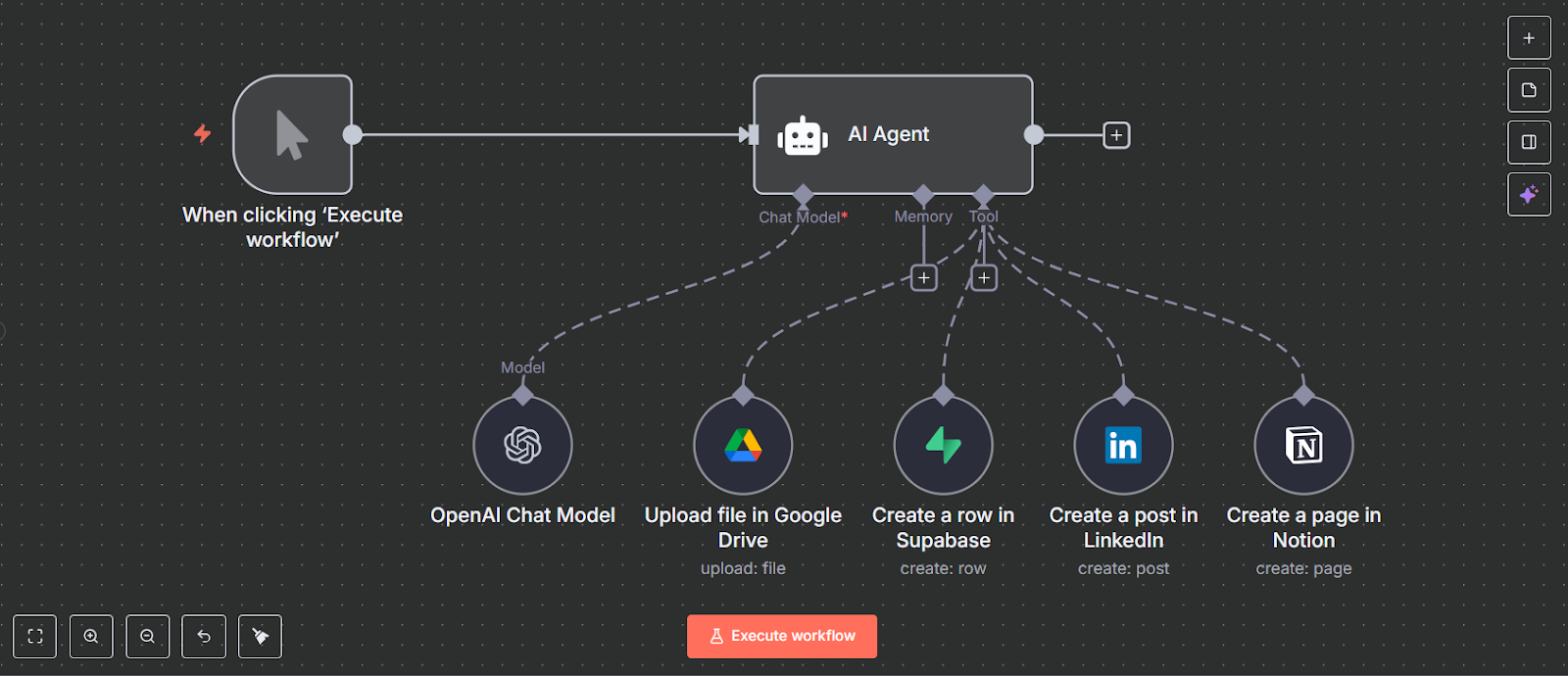
Table of Contents
- Why Automation, Why Now?
- Python for Automation: Core Building Blocks
- RPA vs AI: Where Each Fits
- Fine-Tuning LLMs for Reliability
- Automating Customer Service with AI Chatbots
- Predictive Maintenance & Fraud Detection
- Edge Computing Use Cases
- Supply Chain Optimization with AI
- Automating Workflows with Orchestrators
- Common Mistakes to Avoid
- Action Steps / Quick Wins
- Examples / Templates / Use Cases
- FAQs
- Conclusion
Why Automation, Why Now?
Automation used to be brittle. Today, combining Python for automation with modern AI makes it flexible, fast, and affordable. The sweet spot is letting rules handle predictable steps while AI handles judgment calls.
Note: Start with one painful task, prove value in days, then scale. Momentum beats massive roadmaps.
Python for Automation: Core Building Blocks
Python is the Swiss Army knife of automation. It’s readable, stable, and has libraries for practically everything.
Essential Libraries
- Playwright / Selenium — browser tasks and scraping
- Pandas — data cleanup, joins, and reporting
- FastAPI — wrap automations as APIs or microservices
- Requests / httpx — talk to any REST API
- Watchdog — file system triggers and watchers
- OpenCV — image-based checks, simple vision
- LangChain / LlamaIndex — LLM flows and retrieval
If your workflow touches text, numbers, files, or web apps, Python for automation will carry you a long way.
Key Takeaways
- Python + AI turns brittle scripts into robust automations.
- Keep business logic in code; use tools to orchestrate and monitor.
- Ship small, prove ROI, then expand safely.
RPA vs AI: Where Each Fits
RPA follows steps: click here, paste there, download this report. It shines when UIs and rules stay stable.
AI reasons: classify emails, summarize docs, extract entities, decide next best action. It handles ambiguity and variation.
Best practice: use RPA for deterministic steps and AI for judgment, routing, and language tasks. That combo is both efficient and resilient.
Fine-Tuning LLMs for Reliability
General models are good. A fine-tuned model can be predictable for your domain—style, terminology, formats, escalation policies.
When to Fine-Tune
- You need consistent tone or specific structured outputs.
- You have historical examples (tickets, chats, emails, SOPs).
- Prompts alone can’t hit your accuracy target.
Pair fine-tuning with retrieval so the model cites the freshest data. Together, you’ll reduce hallucinations and keep answers on brand.
Automating Customer Service with AI Chatbots
Great chatbots don’t try to replace agents—they make agents 10× faster. Use AI to resolve routine issues and escalate with context for the edge cases.
Core Capabilities
- Instant answers from your docs and past tickets
- Ticket creation and smart routing with summaries
- CRM lookups and updates via API
- Order status, refunds, and reminders
Reference stack: Python backend, vector DB for retrieval, fine-tuned LLM for brand voice, API hooks to CRM/helpdesk, and lightweight RPA for UI glue when APIs are missing.
Predictive Maintenance & Fraud Detection
Predictive maintenance: analyze sensors, logs, and vibration to fix before failure. Start with thresholds, graduate to anomaly detection and time-series models.
Fraud detection: learn normal behavior (amounts, geos, device signals). Flag outliers and sequences that don’t fit the pattern. Combine rules + ML to reduce false positives.
Edge Computing Use Cases
Edge is about instant decisions when latency and privacy matter. Cloud still handles heavy training and storage.
- Smart spaces: occupancy, safety checks, fall detection
- Manufacturing: quality control on the line
- Retail: loss prevention and self-checkout assistance
- Healthcare devices: continuous monitoring
- Robotics: navigation and local planning
Supply Chain Optimization with AI
Use AI to forecast demand, plan inventory, and route shipments. Blend historical sales, seasonality, promotions, and delays to avoid stockouts and reduce waste.
- Forecasting (Prophet/ARIMA/Deep Learning)
- Routing and scheduling (OR-Tools)
- Supplier risk signals and lead-time modeling
Automating Workflows with Orchestrators
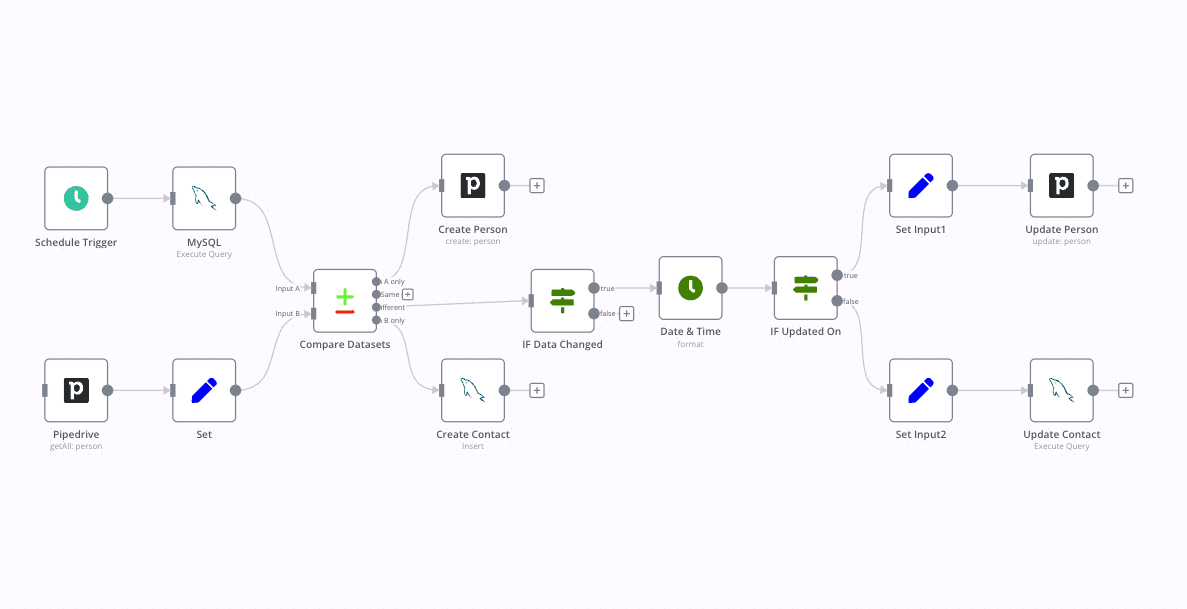
Tools like Zapier, Make, n8n, Airflow, and LangGraph coordinate steps. They’re best when paired with Python for automation services that do the heavy lifting and AI that handles reasoning.
Reliable Pattern
- Orchestrator for triggers, retries, logging, alerting
- Python microservices for data transforms and APIs
- AI components for classification, extraction, summarization
Common Mistakes to Avoid
- Automating chaos: fix the process before you code it.
- No observability: add logs, metrics, and dead-letter queues.
- Overusing AI: if a rule works, use a rule.
- Under-testing LLMs: keep eval sets and monitor drift.
- Skipping security: least privilege, secret rotation, audit trails.
Action Steps / Quick Wins
- List your top five repetitive tasks; pick one with clear ROI.
- Build a Python script that does the core work end-to-end.
- Wrap it in FastAPI; add basic logs and error handling.
- Plug into an orchestrator (n8n/Zapier/Make) with retries.
- Add AI where rules crack: classification, extraction, summaries.
- Create a small eval set and track weekly accuracy.
- Document the SOP so anyone can run and maintain it.
Examples / Templates / Use Cases
Email → CRM Auto-Logging
Use Python to parse incoming emails, extract contact and intent with an LLM, create or update CRM records, and notify the rep with a summary.
Invoice Extraction
Watch a folder for new PDFs, extract fields via OCR + LLM, validate with rules, then post to your finance tool. Flag low confidence for human review.
Weekly Ops Report
Query your data sources, clean with Pandas, generate a short narrative summary with AI, and email a PDF every Monday at 9 AM.
FAQs
Is Python still the best choice for automation in 2025?
Yes. It’s stable, well-documented, and integrates cleanly with AI stacks and orchestration tools. For most teams, Python for automation balances speed and maintainability.
When should I choose RPA over direct APIs?
Use APIs when available. Choose RPA for legacy apps or missing endpoints, then migrate to APIs later. Keep RPA steps thin and observable.
Do I need to fine-tune a model, or is prompt engineering enough?
Start with prompting and retrieval. If you need consistent formatting, tone, or domain accuracy, fine-tuning pays off.
What’s a simple way to add edge computing?
Run a lightweight service locally (e.g., on a Raspberry Pi or Jetson) for real-time checks, then sync summaries to the cloud for storage and analytics.
How do I measure ROI for automation?
Track hours saved, error rates, cycle time, and dollar impact. Set a 4–6 week target to validate value before scaling.
Conclusion
Keep it simple: pick one workflow, automate the obvious parts with Python, add AI where judgment is needed, and lean on an orchestrator for reliability. That’s how you turn scattered tools into a calm, scalable system.
-Turbocharge Your Workflow
Try our free AI-powered tools to automate your daily tasks.


